AI tools for social media creators are no longer a cute extra. They are the only way to keep up with posting, analytics, and video without burning out or tanking quality. If you notice your ideas pile up in drafts while other creators ship daily, that is your signal. Your feed will not slow down for you. With the right AI tools for social media creators, you can turn a single clip into a full week of posts, test more hooks, and still log off at a sane hour.
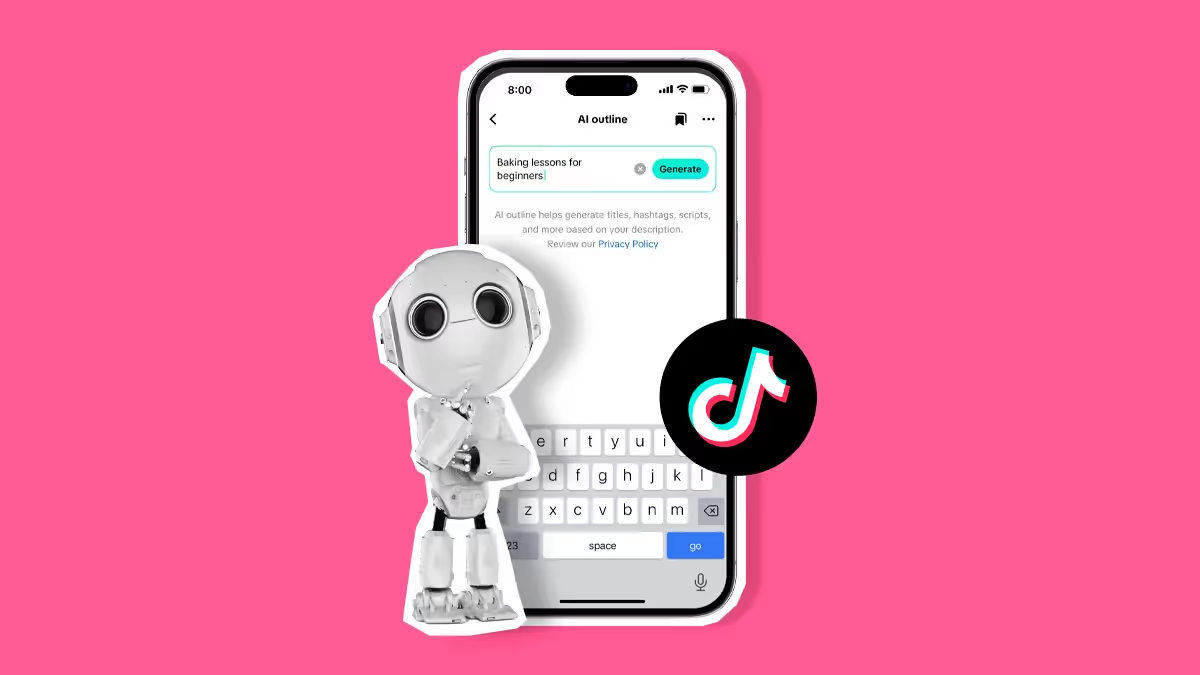
In this guide, we’ll cover the best AI tools for social media creators in 2026. We’ll also go over how to find and pick the right tools for different platforms and use cases below.
What are AI Tools for Social Media Creators?
AI tools for social media creators are apps that use machine learning to write posts, design visuals, edit video, schedule content, and read performance data so you are not guessing what worked. Instead of starting from a blank page, you feed these tools a topic, link, or video, and they propose drafts, hashtags, or clip ideas tailored for each platform.
Many social media AI tools now combine several jobs in one place. A scheduler like Metricool layers AI caption suggestions, best-time-to-post recommendations, and real-time analytics to show which formats and topics keep your audience active. Graphic tools such as Canva’s AI social media post generator create captions and visuals together, then let you schedule from the same dashboard.
You also get tools that listen to conversations about your brand and niche. Platforms like Brandwatch and Brand24 scan millions of posts and news items, then use AI to cluster topics, sentiment, and influencers so you can see which content themes are rising or fading. For creators, these AI social media tools turn raw chatter into usable prompts, angles, and proof that your content is (or is not) landing.
How to Pick the Best AI Tools for Social Media Creators?
Choosing AI tools for social media creators is less about flashy features and more about what you actually publish.
You should map your workflow first, then match tools to each step.
If you need to, start with one content creator AI tool and expand later.
Clarify your content workflow
You could start by listing what you publish weekly: short clips, threads, Reels, LinkedIn posts, carousels, blog links, or live streams. Then look at where you lose momentum: writing captions, clipping video, repurposing one post across platforms, or reading analytics. Tools like FeedHive were built specifically to repurpose and recycle existing content into fresh variations across platforms, not to plan your whole strategy from scratch.
You will know a tool fits when its features match those choke points. FeedHive’s content recycling and conditional posting, for example, focuses on reposting proven content under certain rules instead of forcing you into a rigid calendar. If you mostly write long-form blog content and then share it on social, pairing Surfer SEO or NeuronWriter for SEO content with a social repurposing tool makes more sense than buying a big, general “all-in-one” suite.
Check data, analytics, and listening
You should not rely on vanity metrics alone. Metricool’s AI-powered analytics highlight which content formats, time slots, and platforms bring meaningful engagement, not just impressions. Brandwatch’s Iris AI layer builds on this idea by scanning billions of posts, then summarizing why conversations are moving in a certain direction instead of just charting volume.
If you need an AI social listening tool but you are not at enterprise scale, Brand24 focuses on real-time mention tracking, sentiment, and “presence” scores so you can see whether your visibility is rising compared with competitors. For creators trying to pick the best AI tools for social media creators, this kind of insight is more useful than another generic dashboard. It shows which topics and formats are worth doubling down on instead of posting blindly.
Watch pricing, limits, and data policies
AI tools for social media management look cheap until you hit their caps. FeedHive, for example, uses AI credits across plans, so heavy use of caption generation and performance predictions on lower tiers can run you into limits faster than expected. Buffer takes the opposite route: its AI Assistant has unlimited usage across all paid plans, but the AI features focus on text help rather than images or DMs.
You should also read how tools handle your data. Some platforms market themselves as an AI-driven tool for marketers but store years of campaign performance and brand data in the process. If you are using ChatGPT for business workflows or Claude Pro for campaign copy, check whether training is disabled by default on your plan and who can access shared prompts and outputs. Long term, that matters more than one extra template.
Types of AI Social Media Marketing Tools
AI in social media now touches every part of the workflow, from idea to reporting. Here are the main types of AI social media tools you will run into.
- AI copy & caption generators
Tools like Canva’s AI social media post generator and Buffer’s AI Assistant create post ideas, captions, and hooks from a short prompt. Many double as a free AI caption generator for social media on their entry tiers, so you can test them before upgrading for scheduling or analytics features. - Image and design tools
Canva Pro combines templates, AI image generation, Magic Write, and AI-powered resizing to adapt designs across platforms without redrawing everything. Smartli’s visual tools such as its AI background remover and AI photo enhancer clean up product shots and thumbnails for ecommerce creators who need studio-style images without pro gear. - Video editing and generation tools
Opus Clip can help you repurpose long-form video content into viral shorts by auto-clipping a one-hour video into 10–25 vertical clips, each with captions and a virality score. Veed for AI-powered video editing, Capcut, PixVerse no-cost AI video tool, Google Veo 3, and Kling AI all push into AI-generated or AI-edited video, from auto subtitles to multi-shot narrative clips and native vertical formats. - Scheduling, automation, and workflow tools
FeedHive for content recycling and conditional posting lets you create posting plans and trigger rules based on engagement metrics. Platforms like Gumloop go further by wiring AI agents into your full marketing stack so automations can watch social mentions, generate posts, and route reports into Slack without manual setup in every app. - Analytics, social listening, and GEO tools
Metricool tracks social and ad performance with AI summaries and competitor analysis so you can adjust campaigns faster. Brandwatch and Brand24 act as AI social listening tool options that scan social networks, news, and even LLM outputs like ChatGPT to show sentiment, influence scores, and AI search visibility. Writesonic's all-in-one GEO tool tracks how brands appear inside AI-generated answers across ChatGPT, Gemini, and other assistants, which now matters as much as classic SEO rankings. - SEO and long-form content tools that feed social
Surfer SEO and NeuronWriter use AI to plan and optimize articles, then score how well your content covers a topic and appears in AI answers. When you attach those articles to social posts, you are not just sharing any link, you are sharing a page tuned for both Google and AI assistants. That is why many best AI tools for social media content creation live partly in your CMS, not only inside your scheduler. - Agentic and measurement platforms around social
Systems like Perplexity Computer orchestrate multiple AI models and tools so a single instruction can trigger research, content creation, and reporting workflows that run for hours. For bigger teams, Octane 11 and Multinex connect social campaigns to pipeline and marketing mix modeling so your social reports match what finance and leadership see.
Why Use AI Tools in Social Media?
You can post without AI, but you will feel the gap once your calendar, edits, and reporting expand. AI tools for social media creators shrink the busywork so you can spend more time on ideas and on-camera work.
- Save serious production time
Case studies on Claude Pro and other assistants show teams cutting content production time by 60–75 percent, which can easily translate into AI tools that save creators 20+ hours every week once you include research, drafting, and revising. FeedHive’s AI planning workflows and Metricool’s AI scheduling both show how content creators use AI automation to publish more without living inside every app all day. - Test more ideas, safely
FeedHive’s conditional posting lets you trigger follow-up posts only if engagement or impressions cross certain thresholds, so experiments do not flood your feed when a test flops. Opus Clip’s virality scores and auto-captioned clips mean you can trial multiple hooks from the same long video and only push the best to your main channels. - Get insights with AI instead of dashboards alone
Brandwatch’s Iris AI turns billions of data points into natural language summaries, answering “what changed this week?” in chat form instead of forcing you through filters. Brand24 adds AI insights and storm alerts, flagging unusual spikes in mentions and breaking down sentiment so you can engage your social audience before a trend passes or a crisis spreads. This is AI in social media used as an analyst, not just a graph engine. - Connect social, search, and AI answers
Surfer SEO’s AI visibility tracking shows how often your pages are cited in AI search responses, not just classic rankings. Writesonic GEO and Brand24’s LLM monitoring extend that idea by tracking where your brand shows up in ChatGPT, Claude, and other assistants, which directly affects how your social traffic discovers deeper content. - Measure real revenue impact
If you run paid campaigns, Octane 11 connects ad impressions, website visits, email opens, and CRM activity at the account level so you can see which social and content touches matter for revenue. MMM platforms like Multinex combine marketing mix modeling with geo experiments to show which channels and campaigns really drive incrementality instead of just last-click wins. - Push into AI video without studio budgets
Veed, Capcut, PixVerse, Google Veo 3, Kling AI, and Opus Clip all lower the cost of producing short-form video, from AI subtitles and text-to-video clips to multi-shot scenes with native audio. Creators who used to only post static images can now keep up with video-first platforms using AI social media marketing tools, without hiring an editor for every clip. - Layer learning on top of practice
Many platforms maintain their own AI social media marketing course style resources, from Metricool’s AI in social media guides to Brand24’s monitoring tutorials and MarketerMilk’s breakdown of AI marketing stacks. If you notice, the creators who move fastest borrow these playbooks, mix them with personal experiments, and use campaign planning with ChatGPT and Claude Pro to stress test ideas before putting real money or time behind them.
10 Best AI Tools for Social Media Creators in 2026
These are not generic AI marketing tools; they are the top AI tools for social media creators doing real work in 2026 and are widely discussed among marketers, power users, and communities like r/DigitalMarketing.
1. Smartli
Smartli is an all-in-one AI tool for social media creators who also sell products, run blogs, or manage ads. It started as an AI description generator but now covers blog posts, ads, and image cleanup, so your content stays consistent from product page to Instagram carousel. The product description and blog tools lean heavily into SEO, which pairs well with organic social distribution. Smartli is especially strong for ecommerce creators on Shopify, Amazon, or Etsy who need fast, search-friendly copy and clean visuals for feeds and storefronts.
Key features
- Product descriptions tuned for search and social
Smartli’s product description generator builds SEO-focused product copy, meta descriptions, and bullets that fit marketplaces and shop themes, so your product links in posts lead to pages that can actually rank and convert. - Blog post writer that matches your niche
The blog post writer creates structured outlines, keyword-rich headings, and full drafts designed to rank while staying readable, which is ideal if you share educational posts from your site into social threads. - Platform-aware ad copy
Smartli’s AI ads writer generates platform-specific ad variants for Facebook, Instagram, TikTok, Google, and LinkedIn, including hooks, primary text, and CTAs aligned with each network’s norms. That is useful when you run AI social media marketing alongside paid campaigns. - Image tools for feed-ready visuals
With the AI background remover and AI photo enhancer, you can remove cluttered backgrounds, sharpen details, and standardize lighting for product shots and thumbnails. This matters when you want Instagram and Shopify to share the same clean imagery. - Fixing robotic AI copy
Smartli's content humanizer rewrites AI-generated text to sound more natural, removing repetitive patterns while keeping your message intact, which is handy if you draft with other models like ChatGPT or Claude and want more human tone. - Watermark and asset cleanup
Smartli's watermark remover uses AI inpainting to remove logos, stamps, and dates without leaving smudges, so you can clean up old visuals for reels, carousels, or moodboards.
2. Gumloop
Gumloop is one of the favorite AI tools for social media marketing in 2026 among power users because it connects AI models like ChatGPT, Claude, and Gemini to the rest of your marketing stack. Instead of just scheduling posts, you set up AI agents and workflows that can watch social channels, pull metrics, summarize comments, and draft responses or posts automatically. MarketerMilk’s 2026 review calls Gumloop the best tool for AI automations, and shows marketers using it to run continuous agents for research, content operations, and social monitoring. Creators use it to turn one video, thread, or blog into multi-platform content plus auto-generated reports.
Key features
- Natural language workflow builder
You describe what you want, and Gumloop’s “Gummie” chatbot wires together nodes like data sources, AI processing, and outputs so non-technical creators can automate tasks like caption drafting and report generation. - Continuous AI agents
Gumloop supports always-on agents that monitor feeds, mentions, or RSS sources, then send you summaries and ideas in Slack or email, which is ideal if you want AI tools for social media management that keep working between your posting sessions. - Video-to-post pipelines
Tutorials show Gumloop workflows that take a single video file, transcribe it, detect highlights, and generate platform-specific posts for YouTube, LinkedIn, TikTok, and X, all saved to Airtable. That turns long recordings into content calendars with minimal manual effort. - Template marketplace for marketers
A growing template library gives you prebuilt automations for social listening, content repurposing, and campaign reporting, so you do not have to design flows from scratch every time. - Model-agnostic design
Gumloop can route tasks between OpenAI, Anthropic, and Google models, which is useful if you mix campaign planning with ChatGPT, long-context analysis with Claude Pro, and trend research with Gemini.
3. FeedHive
FeedHive is an AI-forward scheduler that focuses on content recycling, post variations, and conditional posting rules instead of just queuing posts. Reviews highlight its AI-powered caption generation, performance prediction, and multi-platform scheduling as strengths for solo creators who want to stay consistent without micromanaging slots. FeedHive’s posting plans and category-based queues also make it easier to keep a balance of educational, promotional, and personal content across the week.
Key features
- AI content variations and optimization
FeedHive can generate multiple caption versions from a single idea and suggest hashtags, then use past performance to predict which variant is most likely to do well. This aligns with what many call the best AI social media content generator behavior: lots of first drafts, then human selection. - Content recycling at scale
Its recycling engine lets you automatically requeue evergreen posts and top performers, so high-value ideas keep resurfacing without spamming your audience. For creators who publish across several networks, this supports free AI tools for social media content creation when combined with light manual edits. - Conditional posting rules
With FeedHive’s post conditions, you can tell the system to only post follow-up comments or threads if the main post hits certain engagement, impressions, or like thresholds, or after a timed delay. That is useful when you want to automate your marketing funnel without over-posting. - Posting plans and queues
You set recurring posting slots by day and time, link them to categories, and FeedHive automatically fills those slots with queued content instead of you picking dates manually. This keeps your calendar active even when you are producing new content in bursts. - Analytics tuned for social
FeedHive tracks performance by platform and helps you see how recycled posts perform versus new ones, so you can decide whether to lean harder into repurposing or ideate more fresh content.
4. Metricool
Metricool is a social media and ads management platform with AI analytics that creators use to plan, schedule, and track content across all major networks and even Google Business Profiles. Its 2026 AI guides explain how the tool reads audience behavior, engagement trends, and competitor accounts to suggest better posting windows and content types. For creators who want AI tools for social media creators that include paid campaigns, Metricool can also manage Facebook, Instagram, and Google Ads from the same dashboard.
Key features
- All-in-one scheduling
Metricool lets you plan posts for Instagram, TikTok, LinkedIn, X, Pinterest, Threads, Bluesky, and more from a drag-and-drop calendar, including bulk upload. This is handy if you treat social media AI tools as a single control center instead of juggling native apps. - AI-guided analytics
Its AI-powered analytics highlight which formats, topics, and time slots drive the best engagement for each platform, then surface competitor benchmarks so you can adjust quickly. This is where you really get insights with AI rather than eyeballing graphs. - Competitor and ad tracking
Metricool can watch competitor accounts, track their engagement rates, and monitor your ad performance in the same interface, helping you see how organic and paid work together. - Vertical-specific recommendations
Metricool’s guides on AI in social media provide playbooks for influencers, agencies, and brands, which function almost like a lightweight AI social media marketing course when paired with real campaigns. - Report automation
You can generate branded reports for clients or stakeholders on a recurring schedule, saving time on formatting and screenshotting.
5. Opus Clip
Opus Clip focuses on one job: turning long-form video into short-form clips for TikTok, Reels, Shorts, and other vertical feeds. Reviews and tutorials in 2026 rate it as one of the top AI tools for social media creators who podcast, stream, or film talking-head content but need shorts without editing each clip. The AI analyzes audio, visuals, and emotional peaks to find highlight moments, then adds captions and aspect-ratio adjustments.
Key features
- Automatic highlight detection
Opus Clip’s model evaluates visual cues, sentiment, facial expressions, and audio peaks to find segments that are most likely to perform, not just random time windows. That matters when you are trying to create the best AI social media content generator workflow from a single source video. - Batch clip generation
From one upload or URL, the tool can output 10–25 clips, each with auto captions and vertical framing, which reviewers say is enough to fill weeks of short-form posting. - Virality scoring
Each clip gets a virality score based on how well similar content has performed, helping you pick the strongest pieces without watching everything in full. - Platform-aware outputs
Opus Clip supports direct posting or scheduling to YouTube Shorts, TikTok, Instagram Reels, LinkedIn, X, and Facebook. That makes it a practical AI social media post generator for video creators. - Captioning and styling tools
It adds animated captions, emojis, and brand styling, so clips feel native to short-form feeds instead of looking like raw cutdowns.
6. Canva Pro
Canva Pro gives creators AI-assisted design, image generation, and a free AI social media post generator tightly tied to templates and a content planner. It is popular among best free AI tools for content creators because the free tier already covers many templates and Magic Write, while Pro unlocks more assets, analytics, and scheduling. Canva’s AI tools span text, images, and video, making it useful for those who want AI social media tools without learning full design software.
Key features
- AI social media post generator
Canva’s AI social media post generator creates text tailored for different platforms and tones, then pairs it with design templates so you can publish-ready posts quickly. It works well when you want a free AI social media post generator that plugs into your existing brand kit. - Magic Design and Magic Media
Magic Design lets you describe a post and get several full layouts instantly, while Magic Media can generate images from text, which speeds up idea-to-visual workflows. - AI-powered photo and video editing
Canva Pro folds in AI-based photo editing and simple video tools, so you can enhance product images and cut basic reels or story videos in one place. - Content planner and scheduling
Canva’s content planner lets Pro users schedule posts across social platforms directly, connecting design work with your posting calendar. - Brand kit and collaboration
You can lock in colors, fonts, and logos so AI outputs stay on-brand, then share designs across teams without relying on separate asset folders.
7. Descript
Descript is an AI-powered audio and video editor where you edit footage by editing text, which many creators now prefer over classic timeline editing. The Descript Creator plan at around 24 dollars per month is often cited as the best value tier, unlocking Overdub voice cloning, Studio Sound noise removal, AI B-roll, and more, all tuned for content production. For social creators, Descript doubles as a screen recorder, podcast editor, and clip generator with direct social publishing integrations.
Key features
- Text-based editing with transcription
Descript auto-transcribes your video, then lets you delete words or sentences to cut the footage, which is far quicker for talking-head and tutorial content. - AI cleanup and enhancement
Studio Sound removes background noise, while AI tools trim filler words and silence, making your content sound more professional without manual EQ or noise gates. - Overdub and AI voices
Overdub can clone your voice for small fixes or scripted lines, which is handy when you want to correct a sentence without re-recording the full video. - Clip generation and social exports
Descript’s Business tier adds AI clip generation from long-form content, but even on Creator you can quickly slice highlight clips and export optimized files for social platforms. - All-in-one workflow
Because Descript handles screen recording, multi-track editing, captions, and exports, many creators use it as their main hub before pushing clips into tools like Opus Clip or FeedHive.
8. Supergrow
Supergrow is focused on LinkedIn, but many social creators rely on it to turn expertise into consistent posts, carousels, and engagement without living on the platform all day. It learns your writing style from previous posts and voice notes, then generates new content that matches your tone, formatting, and hook structure. For B2B creators, founders, or agency owners, Supergrow basically acts as a content creator AI tool for one channel..
Key features
- AI content generator with voice learning
Supergrow analyzes your existing posts and adapts to your sentence structure, word choices, and pacing so new posts read like you, not generic AI. - Voice note to post
You can record a voice note and have Supergrow convert it into a polished LinkedIn post, which saves time if you think better out loud. - Carousel maker
Built-in carousel templates and editing tools make it easier to create LinkedIn carousels that feel polished without separate design software. - Scheduling and first-comment automation
Supergrow schedules posts at chosen times and can auto-add a first comment (for links or CTAs), which LinkedIn power users often rely on for reach. - Engagement tools and lists
The platform lets you build lists of key accounts and uses AI-assisted comments to keep you active with fewer manual replies, which matters for relationship-driven growth.
9. Brand24
Brand24 is a social listening and brand intelligence platform that has doubled down on AI since its acquisition by Semrush. It tracks mentions across social networks, news, blogs, podcasts, forums, and even large language models, making it one of the best social media AI tools for monitoring your name or project. For creators, it shows where content is spreading, which influencers mention you, and how sentiment changes after launches or controversies.
Key features
- Real-time mention tracking
Brand24 monitors major social platforms, news, and web sources, alerting you when your brand, product, or keywords get mentioned so you can respond quickly. - AI sentiment and insights
Its AI classifies mentions as positive, negative, or neutral and can summarize trends, spikes, and recurring themes, so you are not skimming thousands of posts manually. - Influencer and presence scores
Brand24 scores authors by reach and engagement and calculates a “Presence Score” so you can see if your visibility is rising versus competitors. - LLM visibility and GEO features
Recent updates add monitoring of how brands appear inside ChatGPT and other AI assistants, tying social chatter to AI search visibility similar to GEO tools. - Flexible pricing for smaller teams
Compared with enterprise listeners, Brand24 targets SMBs and agencies, with transparent pricing and trials rather than only custom quotes.
10. Buffer
Buffer stays popular among creators who want a simple scheduler plus AI writing help instead of a heavy all-in-one suite. Its AI Assistant is positioned as a caption and idea generator, not a full marketing brain, which keeps the product easy to learn. Reviews of the best AI tools for social media in 2026 highlight Buffer as a lightweight AI social media post generator and scheduler, especially for small accounts and freelancers.
Key features
- AI caption and idea generation
Buffer’s AI Assistant generates post ideas, repurposes existing posts, and summarizes longer content into short updates, functioning as a free AI social media post generator on lower tiers. - Unlimited AI usage
A key differentiator is that Buffer’s AI Assistant offers unlimited generations across paid plans, unlike some tools that gate AI behind strict credit systems. - Simple multi-platform scheduling
Buffer supports scheduling across most major social networks with a clean interface, which is why it frequently appears in lists of top AI social media marketing tools in USA-focused reviews. - Calendar and basic analytics
It includes a content calendar and essential analytics so you can track performance and refine timing without drowning in charts. - Good starter stack fit
Because Buffer plays well with other apps and keeps AI scope focused, many creators pair it with tools like Canva Pro, Descript Creator, and AI social listening tool platforms rather than relying on a single monolith.
AI Social Media Marketing Tools: Extra Use Cases
You will also see newer tools pop up around AI faces and 3D worlds. Threads such as best AI faceswap tools to try in 2026 on Reddit discuss Magic Hour AI and others for stylized face swaps, which some creators test for character-driven content. On the 3D side, platforms like Blackshark AI build digital twins of Earth that brands use for simulations and visuals, hinting at where location-based and AR-heavy social content might head next.
How AI Tools Tie Into Broader Creator Stacks
Some AI tools for social media creators sit alongside broader marketing and site-building tools. Surfer SEO and NeuronWriter help creators plan articles that rank in both Google and AI search, which then feed into social posts and threads. Tools like v0 for building websites generate whole web apps or sites from text prompts, so a creator can spin up a landing page that matches their social campaigns without hiring a dev.
Marketers also talk about Writesonic GEO, Nowfluence’s influencer campaign platform, HeyGen for AI avatar videos, and AI-driven MMM tools like Multinex when planning bigger programs that go beyond organic feeds. And if you are curious how far AI automation can go, systems like Perplexity Computer already run multi-step workflows across 19 models, including media generation engines such as Google Veo 3 and Kling AI, tying social content into larger campaigns.
Conclusion
You do not need every AI tool in this guide. You just need a small stack that fits how you create, publish, and listen. Start from your bottlenecks: captions, video, scheduling, or analytics. Then plug in 1–2 AI tools for social media creators to remove those specific headaches. Once that feels stable, you can layer on automation, SEO, and deeper listening, plus a good AI social media marketing course if you want structure. That’s it!
Best AI Tools for Social Media Creators FAQs
What are AI tools for social media creators used for?
AI tools for social media creators handle idea generation, caption writing, design, video editing, scheduling, and analytics, so you are not doing every step by hand. Canva, Buffer, Metricool, and similar social media AI tools write posts from prompts, suggest hashtags, resize designs, and summarize results. Others like Brand24 and Brandwatch act as AI social listening tool platforms, monitoring mentions and sentiment so you can decide what to post next with real data instead of hunches.
Are there free AI tools for social media content creation?
Yes. Many best social media AI tools offer free tiers or trials, especially around text generation. Buffer’s AI Assistant works on its free plan as a free AI caption generator for social media, and Canva’s free AI social media post generator is available without paying if you stick to basic features. Some video tools like PixVerse and Capcut also provide no-cost AI video tool options for short clips, though advanced features and higher resolutions usually sit behind paid plans.
How do AI tools for social media creators fit into a broader marketing strategy?
AI tools for social media creators often sit on top of a wider stack that includes SEO, email, and analytics. Creators might draft long-form posts with Surfer SEO or NeuronWriter, then use FeedHive and Metricool to slice them into posts and track results across platforms. Bigger teams sometimes plug social into MMM and analytics platforms like Octane11 or Multinex to see how posts contribute to pipeline, while using ChatGPT for business and Claude Pro to plan campaigns and messaging with AI built for marketers.
What is the best AI tool for social media creators in 2026?
There is no single best AI tool for social media creators in 2026, but patterns are clear in reviews and communities. Gumloop is often picked for automation, Smartli for ecommerce content, FeedHive and Buffer for scheduling, Metricool for analytics, and Opus Clip, Veed, Capcut, PixVerse, Google Veo 3, and Kling AI for video. The real win comes from combining a few of the best AI tools for social media creators into a stack that matches your platform mix, posting pace, and tolerance for automation.


%201.svg)


.avif)

.avif)